The simple profile edit that turned dead map pins into phone calls
The Simple Profile Edit That Turned Dead Map Pins Into Phone Calls
You’ve done everything the “gurus” told you to do. You verified your address, uploaded a handful of high-resolution photos, and even managed to snag a few five-star reviews from your most loyal customers. Yet, when you search for your services in your own neighborhood, your business is nowhere to be found. It is a “Ghost Pin” – a verified Google Business Profile that exists in the digital ether but generates absolutely zero phone calls. In my work with OC businesses, I see this daily: a business owner staring at a dead map pin while their competitors soak up all the local leads.
The landscape of google business profile seo has shifted dramatically as we move through 2026. We are no longer just fighting against other local shops; we are fighting against AI-generated map pins and an increasingly complex visual search interface. Google’s algorithm has become more discerning, and simply “having a profile” is no longer enough to secure a spot in the coveted Local Pack. In fact, recent data suggests that GBP signals now account for a staggering 30-35% of local pack ranking factors. If your profile isn’t optimized for the current hierarchy, you’re essentially invisible.
If you’ve been wondering Why Your Irvine Storefront Isn’t Showing Up for Nearby Customers, the answer often lies in a lack of data depth. A dead pin isn’t just a ranking failure; it’s a missed opportunity to connect with high-intent users who are ready to buy *now*. In this guide, I’m going to reveal the one “tiny” edit that has consistently resurrected dead pins and turned them into lead-generation machines.
The Reveal: The “Simple Edit” That Changes Everything
Most business owners treat their Google Business Profile (GBP) like a static yellow pages listing. They fill it out once and never touch it again. However, the secret to high-velocity ranking in 2026 lies in the deep metadata – specifically, your Business Attributes and Secondary Categories. This is the “Simple Edit” that most of your competitors are completely ignoring.
Google’s local algorithm is built on three pillars: Proximity, Relevance, and Prominence. While you can’t easily change your physical proximity to a searcher, you have total control over your *Relevance*. By diving into the “Attributes” section of your profile and selecting high-intent tags – such as “Online appointments,” “Emergency services,” or “Identifies as women-owned” – you are feeding the algorithm specific data points that trigger relevance filters. For example, if a user searches for “emergency plumber near me,” Google isn’t just looking for plumbers; it’s looking for the “Emergency services” attribute. If you haven’t checked that box, you don’t exist for that search.
To take this further, you must master your secondary categories. Many businesses pick one primary category (e.g., “Lawyer”) and stop. But a high-performing google business profile optimization strategy involves selecting up to nine secondary categories that cover the full spectrum of your services (e.g., “Personal Injury Attorney,” “Trial Attorney,” “Legal Services”). This tells Google’s AI exactly which “buckets” your business belongs in. When you combine these specific attributes with a robust google maps ranking service, you create a profile that isn’t just a pin on a map – it’s a relevant answer to a user’s specific problem.
This “Tiny Attribute Edit” works because it aligns with how Google’s Knowledge Graph understands local entities. In 2026, the algorithm uses these attributes to power “Instant Booking” features and visual search results. If your profile lacks these details, the AI cannot confidently recommend you to the user, and you remain buried on page 4.
The 2026 Local Ranking Hierarchy
What actually moves the needle today? The days of keyword stuffing your business name are over (and will likely get you suspended in the current 2026 AI verification waves). To rank google business profile listings effectively, you need to understand the current weighting of ranking factors. Based on our latest research and cross-platform data analysis, the hierarchy is broken down as follows:
- GBP Signals (30-35%): This includes your primary category, the completeness of your attributes, and your “Proximity to Search” relevance.
- Proximity (20-25%): How close the user is to your physical location or defined service area.
- Reviews (15-20%): Not just the quantity, but the velocity and the specific keywords found within the text of the reviews.
- On-Page SEO (15%): How well your linked website mirrors the information on your GBP.
- Behavioral Signals (10%): Click-through rates, “Request a Quote” interactions, and click-to-calls.
In 2026, we are also seeing the massive influence of “Car Dash Maps” (Apple CarPlay and Android Auto) and “AI Summaries.” When a driver asks their car for the “best coffee shop with outdoor seating,” the AI doesn’t scroll through a list of websites. It scans the attributes and reviews of local GBPs. If your profile doesn’t explicitly mention “Outdoor Seating” in the attributes, you are excluded from the voice-search result entirely. This is why understanding Why 2026 Irvine SEO Ranks Depend on These 3 New Trust Signals is critical for survival. You are no longer just ranking for a screen; you are ranking for an ecosystem of AI assistants and vehicle interfaces. To keep up with these changes, many agencies are turning to specialized local seo ranking tools to monitor these subtle shifts in real-time.
Beyond the Edit: The “Proximity” Myth
One of the most common complaints I hear is: “Kevin, I rank great when I’m standing in my office, but as soon as I go a mile down the road, I disappear.” This is the Proximity Myth – the idea that you are forever tethered to a tiny radius around your front door. While proximity is a major factor, it is not an insurmountable wall.
For Service Area Businesses (SABs) – like HVAC contractors or mobile dog groomers – this is especially frustrating. The key to breaking the proximity barrier is the strategic use of “Custom Service Areas.” Many owners make the mistake of selecting entire counties or states. This actually dilutes your relevance. Google wants to see a tight, logical service area that reflects where you actually do business. By refining your service areas to specific zip codes or neighborhoods, you stop losing neighbors to map filtering. You can learn more about this in our deep dive on How Irvine Shops Use Custom Service Areas to Stop Losing Neighbors to Map Filtering.
Furthermore, “Prominence” can often override “Proximity.” If your business has significantly higher engagement, better review keywords, and more local citations than a competitor who is closer to the user, Google will often “reach” further to show your profile. This is where the google maps ranking service you choose becomes vital; it’s about building enough authority that Google feels compelled to show you even when you aren’t the closest option.
The Review Strategy for 2026: It’s About Keywords, Not Just Stars
In the past, getting a five-star review was the goal. In 2026, a five-star review with no text is almost worthless for SEO. To truly rank higher on google maps, you need “Review Keywords.” When a customer leaves a review that says, “The best *emergency pipe repair* in *Irvine*,” they are providing Google with the ultimate trust signal. They are confirming your service and your location simultaneously.
You should actively encourage your customers to mention the specific service they received and the neighborhood they are in. When you respond to these reviews – which you should do within 24 hours – incorporate those keywords naturally. For example: “Thanks for the review, Sarah! We’re glad we could help with your *emergency pipe repair* here in *Irvine*.” This builds “Prominence” and helps the algorithm associate your business with those high-intent search terms. This is the exact Review Keyword Move That Pushed an Orange County Business Back Into the Map Pack that we’ve used to dominate competitive markets. To manage this at scale, savvy marketers use google maps lead generation tools to automate the request and tracking process, ensuring no review opportunity is wasted.
Audit & Automation: Scaling the Results
Optimizing one profile is a project; maintaining rankings across multiple locations or for a growing agency is a full-time job. The local algorithm is volatile. A “Visual Search” update or a new “AI Verification” wave can knock you off the top spot overnight. This is why you cannot rely on manual checks alone. To stay ahead, you need a professional google maps rank tracker and a comprehensive audit process.
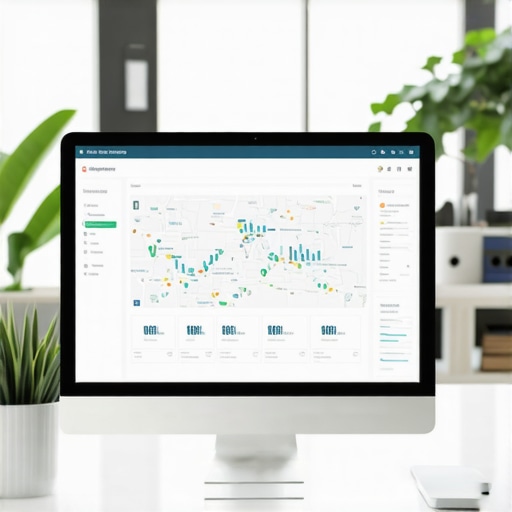
Using a [google business profile audit tool] allows you to see the “Instant Booking” glitches or category conflicts that might be holding you back. Automation isn’t about cutting corners; it’s about having the data to make informed decisions. Tools like SEO Viper Tools provide the granular insights needed to see exactly how your “Simple Edit” is performing across different geo-coordinates. If you aren’t tracking your rankings on a grid, you aren’t seeing the whole picture. You might be ranking #1 at your office but #10 two blocks away. Automation identifies these “weak spots” so you can apply the attribute edits where they are needed most.
Scaling your local SEO efforts requires a shift from reactive “fixing” to proactive “optimization.” By leveraging local seo software, you can monitor your competitors’ attribute changes, track your review velocity, and ensure your NAP (Name, Address, Phone) consistency remains flawless across the web. This is how you turn a single success story into a repeatable system for local dominance.
Conclusion: Take Control of Your Map Pin
The “Simple Edit” of optimizing your attributes and categories is the highest-leverage activity you can perform on your Google Business Profile today. In an era where AI and visual search are redefining the Local Pack, these data points are the currency of relevance. Don’t let your business remain a “Ghost Pin” while your competitors reap the rewards of a modern google business profile seo strategy.
Stop guessing why you aren’t ranking. Perform a local audit, update your attributes, and start focusing on the review keywords that matter. If you’re ready to stop losing customers to the map filter and want to see your phone start ringing again, it’s time to take action. Whether you do it yourself or hire a professional google maps ranking service, the goal is the same: total local dominance. If you need a hand navigating the 2026 algorithm, feel free to Contact Us for a consultation. Let’s turn those dead map pins into your most profitable asset.